
By choice or by circumstance, many people remain renters for their entire lives. This is a class of people who are deeply undervalued and barely considered in our current housing system, where renting is often treated as a temporary step on the path to homeownership, which is assumed to be the default goal or end point for everyone in their housing journey.
In part, this also means that we don’t look enough at models of collective ownership or long-term stabilization of rents, assuming that single-family homeownership is, again, the goal, and that renting or living collectively is a transitory stage in people’s housing journey. We have precious little opportunities for things like housing co-ops or rent-stabilization that moves beyond a few years or a decade at most. Tax credits that make housing affordable almost always are set to expire and the funds that subsidize rent are seldom enough to meet the need.
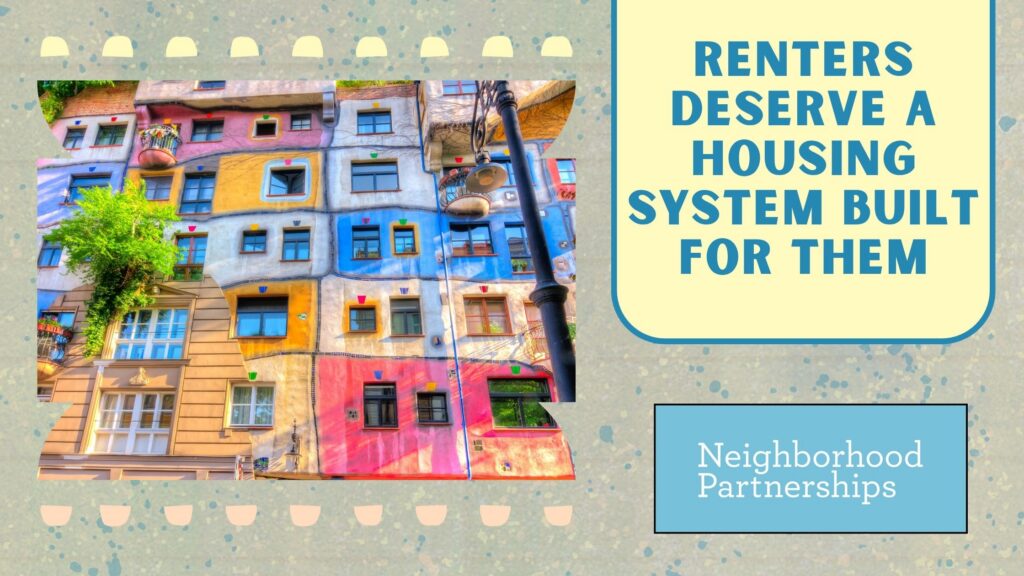
We need new options. The Portland Housing Bureau looked at different models, including through visiting and studying Vienna’s housing system on a trip that Neighborhood Partnerships co-led. They recently released their report to City Council including recommendations for policy and funding changes coming from what they learned from looking at what others are doing.
Tenant Protections Are the Foundation
In the last long legislative session, lawmakers in Salem gutted support for eviction prevention in the state budget. This type of program typically provides a one-time intervention that helps people get through a moment of emergency like a car repair or an unexpected medical bill or even a temporary loss of employment. Small, grassroots tenants’ rights groups rely on state funding like this to maintain staff who are a lifeline for residents whose needs are not getting met.
Many of us working in the sector have also heard plenty of horror stories of property management companies who are unresponsive. Tenants living without heat in the depths of winter. Problems with pests. The list goes on.
It’s easy for folks to look at the numbers around houselessness and then miss the story about how people get there. Hint: It’s usually not because they missed a mortgage payment. While we need a robust shelter system and want paths to homeownership where it’s a good fit for people, we need to be aware of how poor conditions and rising rents are creating untenable conditions for renters across the spectrum.
Public Money Should Serve the People Living in These Homes
We invest a lot of public dollars in addressing our housing needs, as we should and need to. We’ve lost a lot of public trust in this funding though, because it’s not always doing a great job serving those who need it the most. We need to remember the people who actually live in these properties and make them the center of our concern. Not just the nonprofits who build and run the housing. And certainly not just private companies whether they’re construction companies, property management companies, or even private investors who supplement public funds or take advantage of tax incentives.
In part, governments can do this by placing restrictions on what can happen in public housing ranging from limiting return on investment and rent increases to holding people accountable for unsafe or derelict maintenance and management of said housing.
A Real Opportunity, Only Partly Taken
PHB’s report makes some good recommendations that could make some substantial changes in addressing some of these issues, but unfortunately it misses an opportunity to take a deeper look at how we approach the construction and standing up of a broad range of affordable housing. Much about what we’re doing now is not working, and the way that it is not working is creating immense strain on the world of nonprofits who build and run much of this housing.
We believe strongly that governments at all levels should look to Vienna, consistently considered the best housing system in the world, as a model for how we build a sustainable, permanently affordable housing system that serves people’s diverse needs across incomes and personal experiences. This ranges from people exiting a period of houselessness all the way to working families for whom homeownership remains either undesirable or out of reach. And we need to look at the long-term sustainability of this system rather than just patching over the current leaks and emergencies, or else the emergencies and leaks may never end.